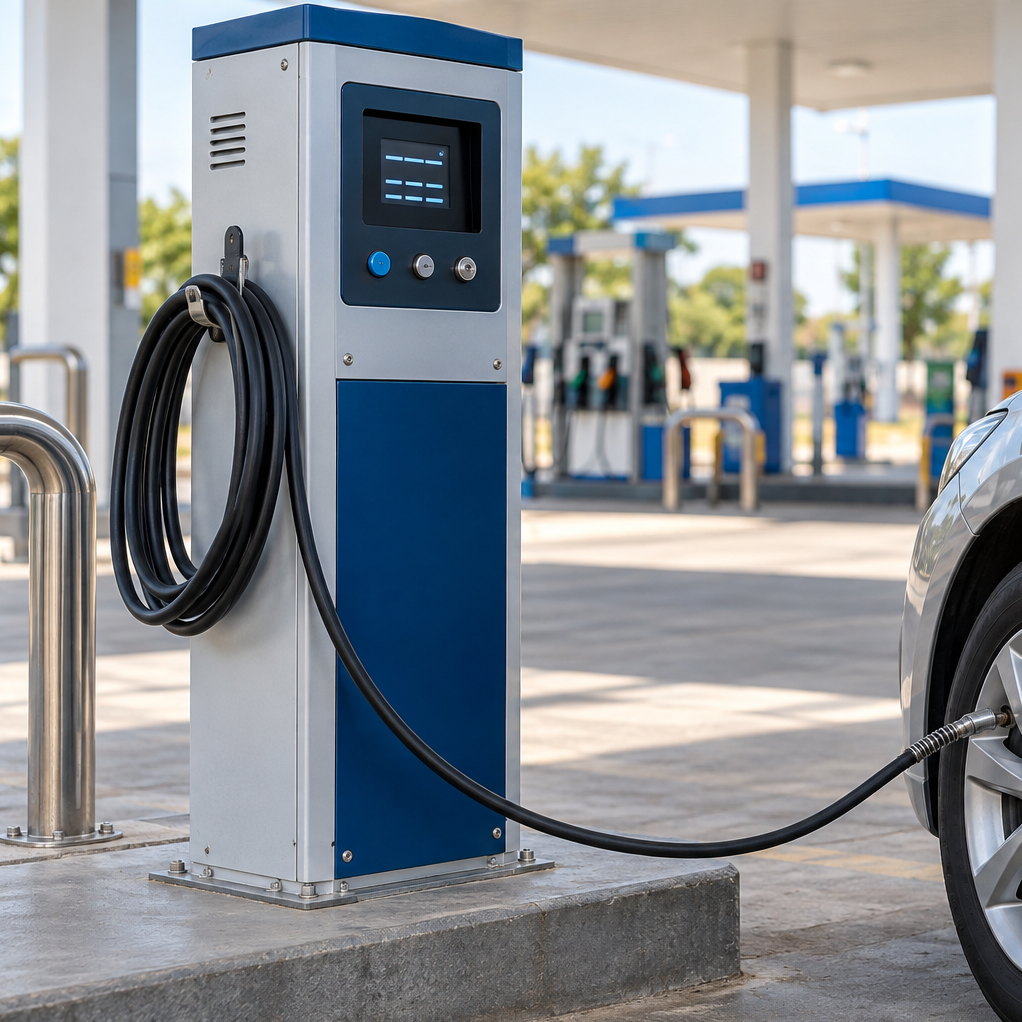
Tyre-pressure facilities can add practical convenience at a fuel station, but installing an Automatic Air Inflator for Petrol Pump requires planning around traffic flow, compressed-air availability, operating conditions, user access, and maintenance.
A petrol pump should evaluate the complete installation environment before selecting the unit.
Study Vehicle Movement First
Air-inflation equipment should be positioned where vehicles can use it without creating unnecessary congestion.
Observe how vehicles enter the fuel station, move between dispensers, access other services, and leave the premises.
The inflation point should provide sufficient stopping space while avoiding interference with fuel dispensing and normal traffic circulation.
Define the Vehicle Mix
Petrol pumps can serve motorcycles, hatchbacks, sedans, SUVs, taxis, and other vehicles.
Understanding the expected user profile helps determine equipment requirements.
The selected inflator should be evaluated according to its stated operating range and intended application rather than assuming every unit is appropriate for every vehicle category.
Check the Air Supply
An automatic inflator still depends on a suitable compressed-air source unless its design specifies another arrangement.
The installation should be assessed for pressure, airflow, piping, connections, and compressor capacity according to the equipment requirements.
Long or poorly designed air lines can influence performance.
Consider Outdoor Conditions
Petrol pump equipment may face dust, temperature changes, frequent handling, and continuous public use.
Ask how the selected machine is designed to be installed and what protection is recommended for its operating environment.
Display visibility and access should also be considered when positioning the equipment.
Make Operation Easy to Understand
Public-facing equipment needs a straightforward operating process.
Users should be able to access the hose conveniently and set or check tyre pressure according to the machine's operating method.
The equipment area should remain uncluttered, with enough room for safe movement around the vehicle.
Plan Maintenance Before Installation
A machine used repeatedly throughout the day will need routine inspection.
Petrol pump operators should establish responsibility for checking hoses, connectors, nozzles, displays, air lines, and other relevant components.
Problems such as damaged hoses or leaks should be corrected rather than allowed to reduce equipment reliability.
Supplier Readiness Matters
Before buying, ask the supplier about installation, commissioning, operating guidance, maintenance requirements, warranty conditions, and service availability.
A supplier should be willing to understand the proposed installation location before recommending a particular setup.
Fuel stations in Zirakpur can experience considerable vehicle movement because of the city's connections with Chandigarh, Mohali, Panchkula, and major Punjab routes. Equipment therefore needs to fit the site's real traffic pattern.
Aarya Automative Solutions provides automotive garage-related equipment and can assist businesses evaluating inflation equipment for commercial locations.
Final Checks Before Ordering
Before purchasing an Automatic Air Inflator for Petrol Pump, confirm:
- Intended vehicle applications
- Required pressure range
- Compressor compatibility
- Air-line requirements
- Installation location
- Hose reach
- Display visibility
- Operating environment
- Maintenance schedule
- Spare availability
- Technical support
- Warranty terms
A well-chosen inflator should be convenient for motorists without disrupting petrol pump operations. Planning the equipment as part of the site's traffic, utility, and maintenance system creates a stronger foundation for dependable everyday use.
Keywords