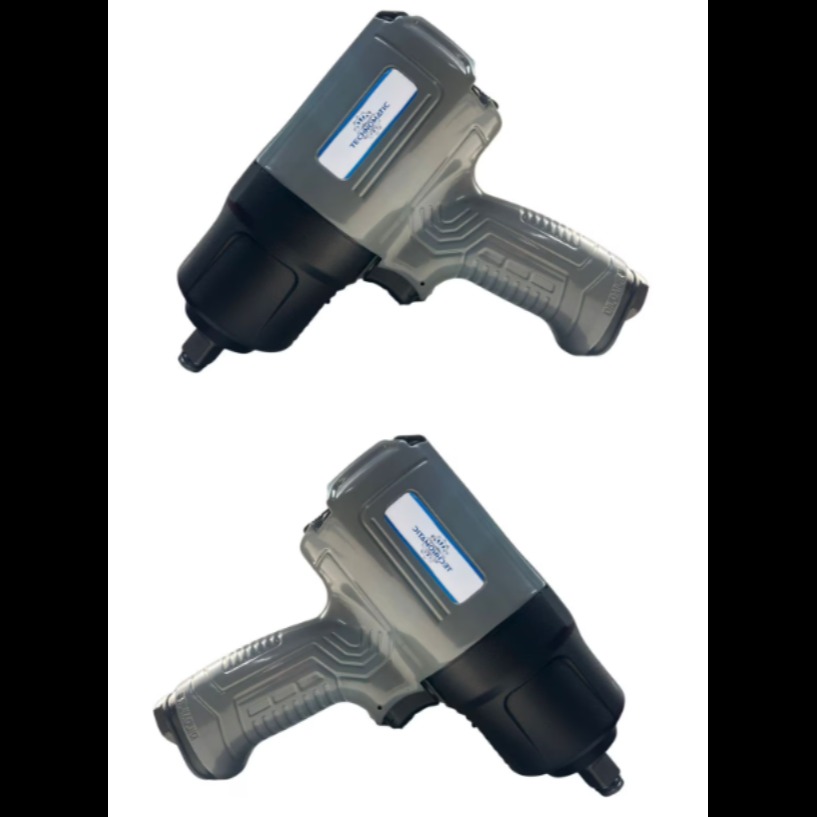
Fastener removal is a routine part of automotive repair, tyre work, suspension service, and general workshop maintenance. An Air impact Wrench can help technicians handle repetitive fastening tasks efficiently when it is matched with a suitable compressed-air system.
Choosing one simply by looking at maximum torque figures, however, can lead to disappointing performance.
Identify the Main Application
Start by determining where the tool will be used most often.
A tyre service centre may primarily need it for wheel-related work. A mechanical workshop may use impact tools across suspension, chassis, and repair applications.
Different tasks can require different torque capability, drive size, tool dimensions, and operating characteristics.
Buying around actual workshop tasks helps avoid both underpowered and unnecessarily oversized equipment.
Check the Air Supply
An air tool depends on the workshop compressor and air-distribution system.
Even a capable impact wrench may perform poorly when air pressure or airflow at the tool is inadequate.
Workshop owners should consider:
- Compressor capacity
- Air consumption requirements
- Hose diameter
- Hose length
- Couplings
- Pressure loss
- Simultaneous air-tool usage
The complete pneumatic system matters.
Think About Technician Comfort
A tool used repeatedly throughout the day should be practical to handle.
Weight, grip, balance, trigger control, forward-reverse operation, and accessibility can affect technician comfort. A heavy tool may offer strong performance but become tiring during repeated use.
Ergonomics deserves consideration alongside technical specifications.
Understand Torque Requirements
More torque is not automatically better.
The tool needs enough capability for the intended work, but final tightening procedures should follow the appropriate requirements for the component being serviced.
An impact wrench should not be treated as a substitute for correct torque-control practices where specified tightening torque matters.
Look Beyond the Purchase Price
Two tools with similar-looking specifications can differ in build quality, serviceability, air efficiency, operating feel, and support.
A low initial price may be less attractive if the tool experiences frequent downtime in a busy tyre shop.
Consider the expected frequency of use. Equipment used occasionally in a small garage faces a different duty cycle from a tool operating throughout the day at a high-volume service centre.
Regional Workshop Considerations
Garages in Zirakpur serve a diverse vehicle population from the Punjab and Chandigarh region. Workshops may work on passenger cars, SUVs, taxis, fleet vehicles, or light commercial vehicles, creating varied pneumatic-tool requirements.
Businesses setting up compressed-air tools should therefore evaluate the compressor, piping, connectors, and individual tools as one working system.
Automotive equipment providers such as Aarya Automative Solutions can help workshop operators understand equipment specifications and supporting infrastructure before purchase.
Avoid Common Selection Mistakes
Common mistakes include selecting only by price, ignoring air consumption, using undersized hoses, choosing excessive torque without considering the application, and failing to plan maintenance.
Air tools also require appropriate care. Operators should follow the manufacturer's recommendations concerning lubrication, air quality, inspection, and servicing.
The right Air impact Wrench should fit the task, technician, and air system. When these three factors are evaluated together, workshops can build a pneumatic setup that supports efficient daily repair work instead of creating avoidable pressure, performance, or maintenance problems.
Keywords