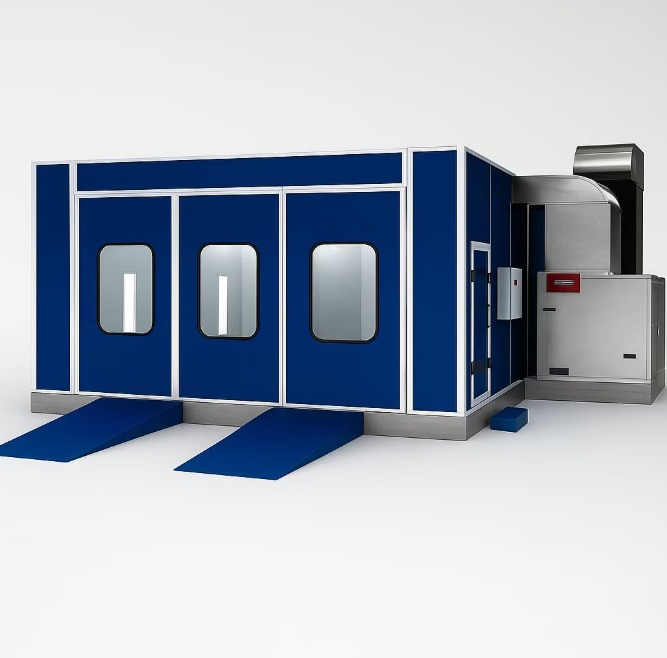
Automotive refinishing requires more than spray equipment and paint materials. The surrounding working environment can influence cleanliness, overspray management, workflow, and the consistency of refinishing operations. A properly planned paint booth creates a dedicated area for automotive painting within a body shop.
Understanding the basic function of the booth is important before considering its size, configuration, or installation.
Why Use a Dedicated Paint Booth?
Painting in an uncontrolled workshop area can expose the job to dust, airborne particles, uncontrolled airflow, and nearby workshop activity.
A booth creates a defined refinishing space where airflow and filtration can be managed more systematically.
Depending on its configuration, a booth may incorporate filtration, ventilation, lighting, exhaust systems, control systems, and other components designed for automotive refinishing operations.
Airflow Is a Key Consideration
Air movement influences how overspray and airborne contaminants travel through the working area.
Different booth configurations manage airflow in different ways. The appropriate design depends on the intended refinishing workload, available space, facility design, and equipment specifications.
Rather than selecting a booth based solely on external dimensions, body shop owners should understand how the complete airflow system is intended to function.
Cleanliness Begins Outside the Booth
Installing a booth does not automatically eliminate contamination.
Dust can enter through poor housekeeping, dirty clothing, contaminated equipment, or careless movement between preparation and painting areas.
Body shops can improve their refinishing workflow by separating activities such as sanding and preparation from the final painting environment wherever practical.
Filters and booth components also require appropriate maintenance.
Lighting Supports Better Work
Painters need clear visibility to evaluate surface coverage and identify inconsistencies during refinishing.
Lighting design should therefore be considered during booth planning rather than treated as a minor accessory.
Technicians should be able to view vehicle panels properly while working without unnecessary shadows or poorly illuminated areas.
Facility Planning Comes First
Before installing a booth, evaluate the building itself.
Important considerations can include:
- Available floor area
- Vehicle entry and exit
- Ceiling clearance
- Electrical requirements
- Ventilation arrangement
- Equipment access
- Preparation areas
- Local requirements applicable to the facility
- Maintenance access
Installation feasibility should be established before equipment is ordered.
Body Shop Requirements in the Regional Market
Automotive body shops in Zirakpur may serve customers from Punjab along with the broader Chandigarh tri-city region. Dealerships, independent repair facilities, accident-repair businesses, and vehicle refinishing centres can have very different workloads.
A facility performing occasional refinishing work may not need the same setup as a high-volume body shop.
Businesses evaluating body shop infrastructure can discuss equipment configuration with suppliers such as Aarya Automative Solutions, particularly when planning a new facility or reorganising an existing workshop.
A Booth Is Part of a Larger Process
Good refinishing results depend on preparation, equipment condition, technician skill, paint-system requirements, cleanliness, and controlled working practices.
The booth should therefore be planned as part of the complete body repair process rather than viewed as an isolated purchase.
A suitable paint booth can provide a more organised environment for automotive refinishing, but its effectiveness depends on thoughtful installation, disciplined maintenance, correct filtration practices, and a workshop layout designed around the complete repair workflow.
Keywords