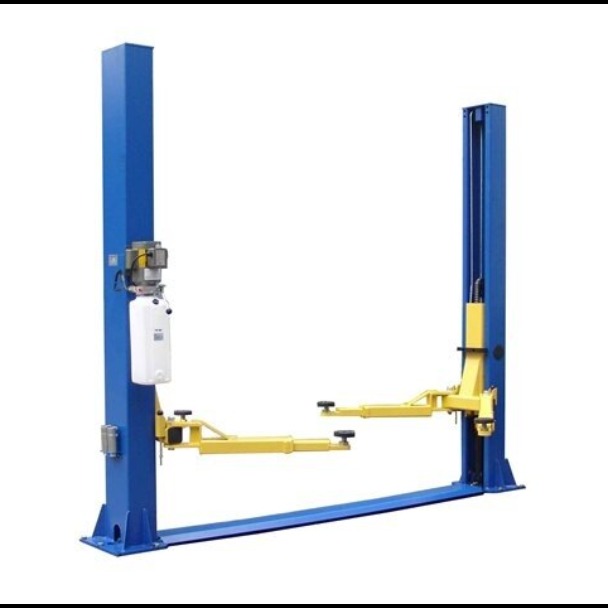
A vehicle lift becomes part of the everyday workflow of a workshop, which makes equipment selection an operational decision rather than a simple purchase. Two Post lifts are commonly considered for mechanical repair, inspection, maintenance, and underbody access, but the correct specification depends on the vehicles being serviced and the facility where the lift will operate.
Before comparing quotations, workshop owners should examine several practical factors.
Start With Vehicle Requirements
Begin with the vehicles that regularly enter the workshop.
Consider vehicle weight, dimensions, lifting points, wheelbase, and the range of passenger or light commercial vehicles expected. A workshop serving small cars has different operational requirements from a facility frequently handling larger SUVs or heavier vehicles.
Rated lifting capacity should always be respected.
Check the Workshop Structure
A lift must be compatible with the installation site.
Floor condition, concrete specifications, ceiling height, column positioning, and available bay width can influence installation. Assuming that any vacant workshop bay can accommodate a lift may lead to costly changes later.
A proper site assessment should take place before finalising equipment.
Examine Safety Features
Price should not be the only comparison point.
Ask the supplier to explain the machine's safety systems, locking arrangement, arm configuration, lifting mechanism, controls, and recommended operating procedures.
Technicians also need to understand correct lifting-point selection and vehicle positioning.
Equipment safety depends on both machine design and operator behaviour.
Consider Daily Workshop Movement
The lift needs to work within the wider service process.
Think about how vehicles enter the bay, where technicians keep tools, how parts are moved, and whether adjacent workstations restrict access.
An incorrectly positioned lift can create congestion even if the equipment itself performs correctly.
Ask About Installation
A lift is not a plug-in accessory.
Before buying, clarify what is included in installation and commissioning. Ask whether site preparation is required and what electrical or other utility requirements need to be completed beforehand.
Installation responsibilities should be clear before the equipment reaches the workshop.
Review Service Support
Downtime matters when technicians depend on a lift throughout the working day.
Ask prospective suppliers about maintenance guidance, spare-part support, technical assistance, and servicing procedures. Understanding the support process before purchase can reduce uncertainty later.
For workshop owners in Zirakpur and other parts of Punjab, supplier accessibility can be an important consideration when equipment requires inspection or service.
Aarya Automative Solutions works with automotive workshop equipment and can help businesses evaluate installation requirements alongside equipment specifications.
Avoid Buying Only for Today's Workload
New workshops often choose equipment around immediate requirements without considering how the business may develop.
Think about expected customer volume, vehicle categories, additional technicians, and future service offerings. This does not mean purchasing unnecessary capacity, but the equipment should fit realistic business growth.
Make the Decision From a Complete Checklist
Before approving Two Post lifts, confirm:
- Required lifting capacity
- Vehicle compatibility
- Available bay dimensions
- Floor suitability
- Ceiling clearance
- Safety mechanisms
- Installation scope
- Utility requirements
- Operator training
- Maintenance needs
- Spare availability
- Service support
Comparing these factors provides a clearer picture than comparing purchase prices alone.
A lift can influence technician productivity every day for years. Careful selection helps ensure the equipment fits the workshop physically, operationally, and financially rather than becoming an expensive constraint after installation.
Keywords